MAXXIS Unveils Enhanced DH Casing: A Closer Look at the Upgrades
MAXXIS claims their new DH casing offers improved grip, enhanced puncture resistance, and the ability to lower tire pressures without significant weight gain. We explore the details and performance of this latest innovation.

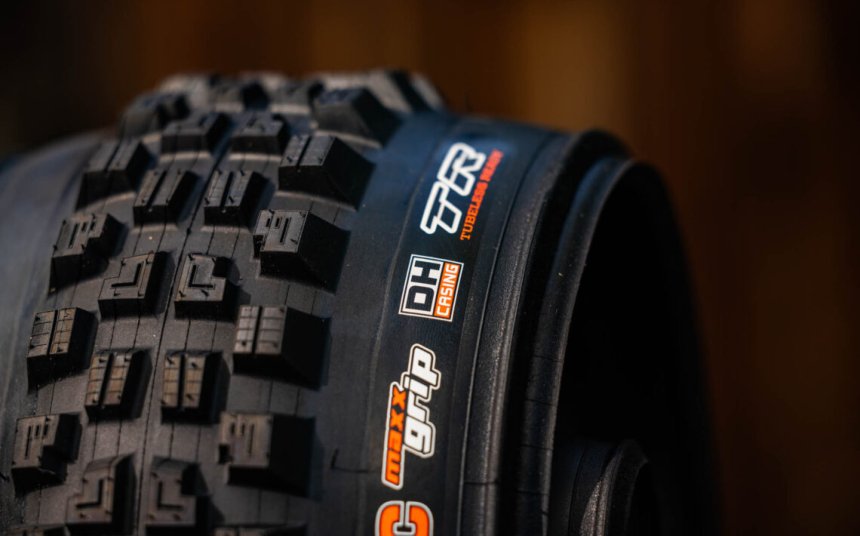
MAXXIS has introduced an upgraded DH casing that promises enhanced grip, superior puncture resistance, and the capability to run tire pressures up to 0.2 bar lower—all while maintaining a similar weight. This new casing construction has been rigorously tested in both laboratory conditions and on the trails to evaluate the validity of these bold assertions.
Historically, the DH casing has been the most robust option in MAXXIS's lineup, widely used in the Downhill World Cup circuit. However, as downhill bikes evolve to reach higher speeds and tracks become increasingly rugged, the demands on tires have intensified. In a sport where races can be decided by mere fractions of a second, and a single puncture can jeopardize a title, the need for advancement is clear.
MAXXIS responds with a refined DH casing designed to provide a more progressive deformation characteristic. This new design aims to absorb minor impacts more effectively, enhancing grip and damping while improving stability during intense cornering and heavy impacts. Notably, MAXXIS suggests that riders can reduce tire pressure by as much as 0.2 bar without compromising performance.
In addition to these improvements, MAXXIS asserts that the new DH casing offers better puncture protection while keeping weight nearly unchanged. This ambitious claim raises questions about the technical modifications made and whether they hold true in both lab tests and real-world conditions.
Detailed Overview of the New MAXXIS DH Casing
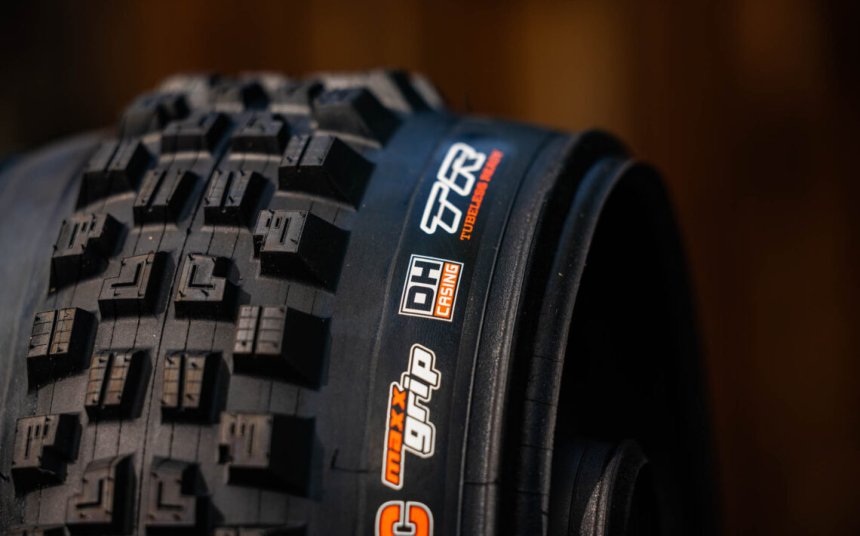
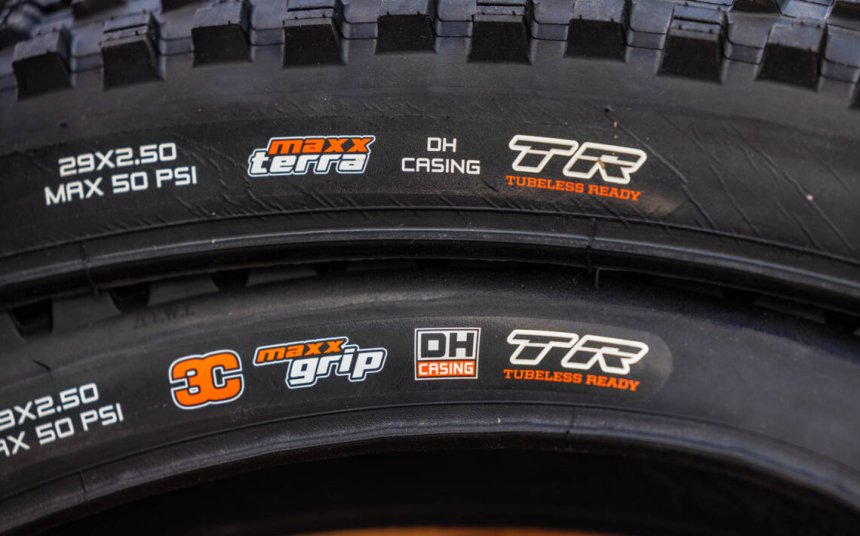
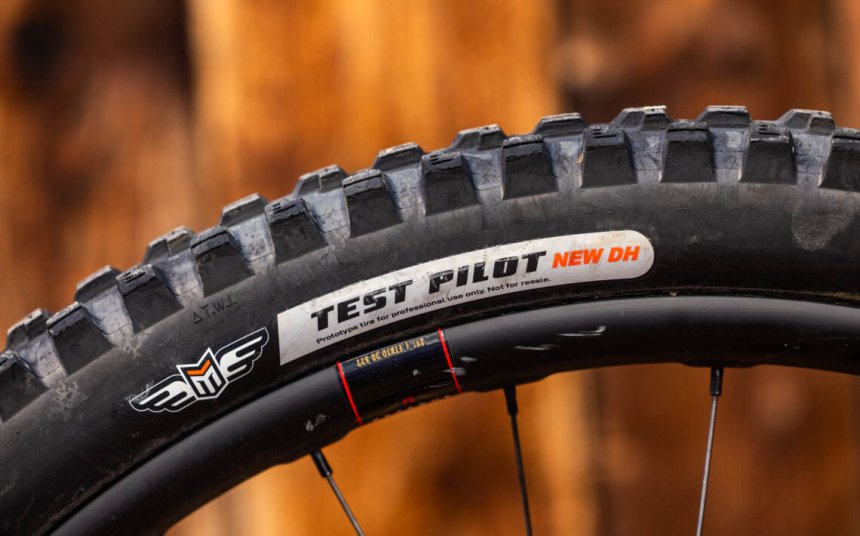
Upon close inspection, the new DH casing is easily identifiable. Unlike the previous model, which featured plain “DH Casing” lettering, the updated version sports a newly designed colored logo on the sidewall. This change aligns the branding with MAXXIS's other mountain bike casing options—EXO, EXO+, and Double Down—creating a more cohesive appearance across their MTB tire range.
Similar to its predecessor, the new MAXXIS DH casing employs a dual-ply construction, which is standard for gravity tires. However, MAXXIS has made significant revisions in four main areas.
One major enhancement is the introduction of two new reinforcement components. A stiffer butyl insert around the tire bead is intended to bolster stability at lower pressures and improve pinch flat protection by an impressive 28%. This increased stiffness is noticeable even before installation, as the bead feels significantly firmer compared to the former DH casing.
Moreover, MAXXIS has added an extra layer of sidewall protection to enhance resistance against cuts and punctures. The manufacturer claims that durability along the sidewall has improved by 24%, while tread resistance has seen an increase of up to 28%.
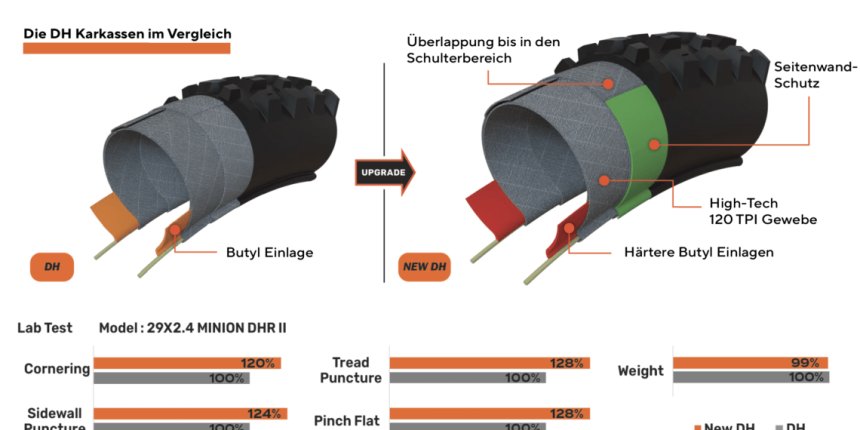
Additionally, the casing construction has been modified. Instead of the previous two 60 TPI fabric plies, the new casing utilizes two finer 120 TPI plies, a feature previously exclusive to the Double Down casing. The finer threads are generally regarded as more flexible and better able to adapt to the terrain. It appears that MAXXIS opted for this higher thread count to counterbalance the stiffer butyl insert, allowing the casing to maintain the desired compliance for a progressive ride feel.
Finally, MAXXIS has substantially increased the overlap between the two casing plies, extending it further into the tire's shoulder area.
Lab Testing of the New MAXXIS DH Casing
To assess the real-world impact of these engineering changes, the new DH casing underwent rigorous lab testing. Utilizing the same standardized testing protocol as previous tire assessments, comparisons were made not only with the previous DH casing but also against competitors from Schwalbe, Continental, and Specialized.
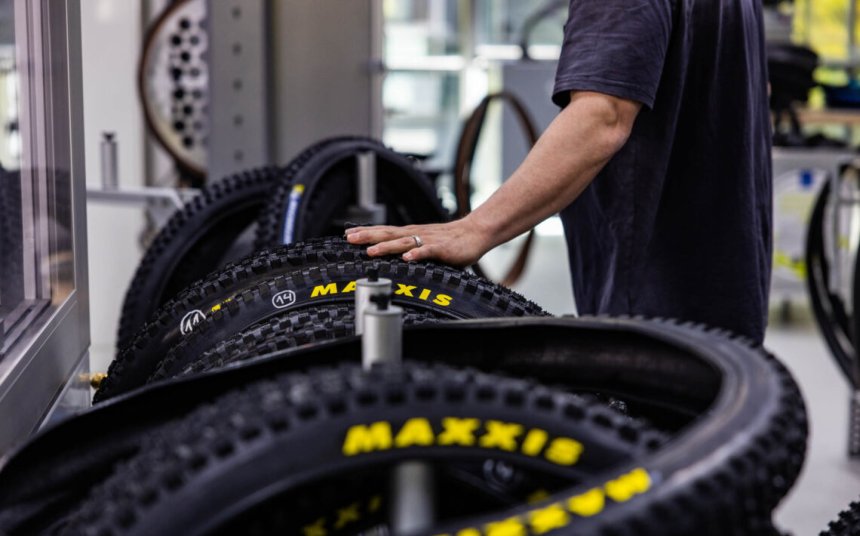
For a fair evaluation, two MAXXIS Minion DHR II tires in a 29 x 2.4″ size with the 3C MaxxGrip compound were tested, differing only in casing construction.
Starting with weight, MAXXIS claims that the new DH casing, despite its more complex design, adds negligible weight, potentially even being lighter than its predecessor. However, our scales revealed a different story. The new DH casing weighed 1,394 g, making it approximately 63 g, or under 5%, heavier than the previous version. A second sample weighed 1,420 g, resulting in a difference of nearly 90 g. Nevertheless, these weight variations should not be overstated; previous tests have shown even larger discrepancies among seemingly identical tires, a phenomenon discussed in detail in our earlier articles. It’s also worth noting that enhanced puncture protection often comes with a slight weight increase.
The main takeaway is that, despite its reinforced construction, the new DH casing only sees a minor weight increase, which is unlikely to significantly affect performance. Weight at the tire has a more pronounced impact on handling compared to the same weight located at the bottom bracket, as it constitutes both unsprung and rotating mass. However, in downhill racing, this trade-off is less critical than the benefits of a more durable casing. Additionally, with many World Cup professionals opting to add weight around the bottom bracket, the pursuit of every gram has become less relevant in downhill competitions.
While rolling resistance might not be the primary concern for downhill tires, the results are still noteworthy. At the same tire pressure, the new DH casing recorded 50.5 W in our lab tests, compared to 52.2 W for its predecessor, indicating a reduction in rolling resistance of about 3%. Although this difference may seem minor, in competitive racing, such marginal gains can be the difference between winning and losing. The stiffer construction likely contributes to this improvement, as the tire deforms less under load, resulting in reduced energy loss.
Furthermore, MAXXIS recommends lowering tire pressure by up to 0.2 bar with the new casing. In practice, this may offset some of the rolling resistance advantage. However, the stiffer design provides the added benefit of being able to run lower tire pressures for increased grip and comfort, likely without any significant penalty in rolling resistance.
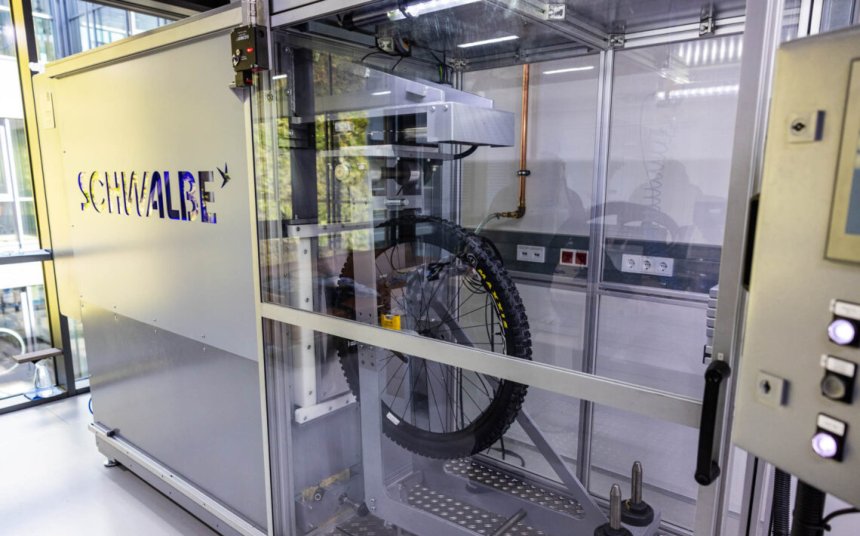
Ultimately, the most critical question for a downhill casing is its ability to withstand rough terrain and finish intact.
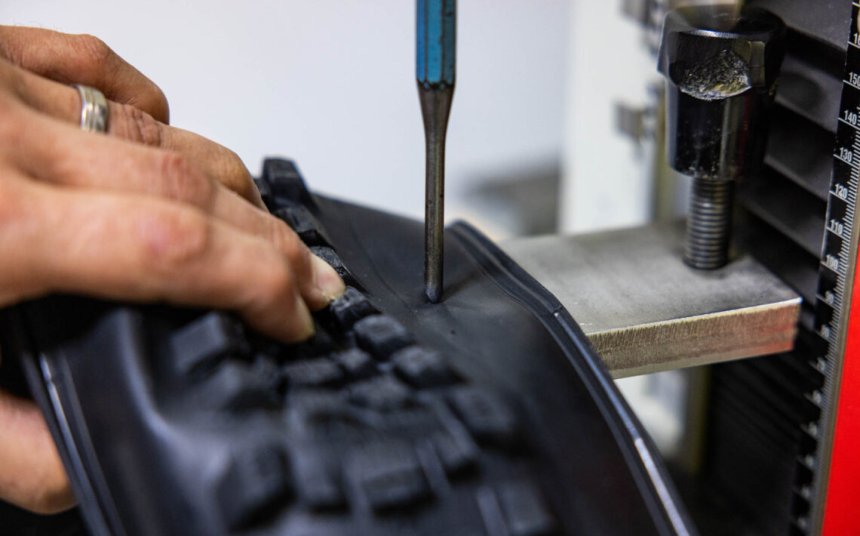
Significant improvements were observed in tread puncture protection, with the force needed to cause a puncture increasing by 13% to 38% depending on the testing method. On average, this aligns closely with MAXXIS’s claimed enhancement of 28%.
In terms of sidewall protection, we recorded a 16% improvement, slightly below the manufacturer’s claim but still indicating that the added protective layer is effective.
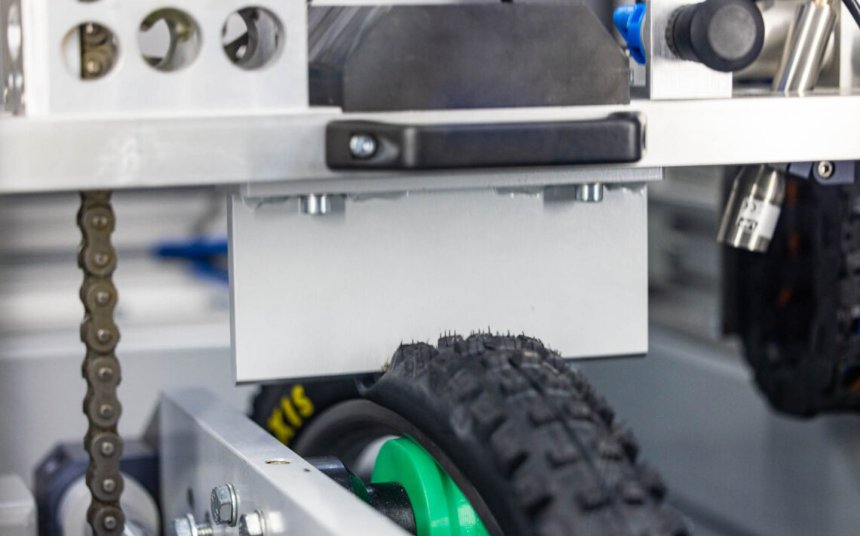
Impact protection also showed measurable improvement. The tire withstood impacts from a 19 kg test striker dropped from a height approximately 8% greater before failing. While this is below MAXXIS's claimed 28% improvement, it still marks a significant advancement. With a maximum drop height of 640 mm, the new DH casing ranks among the top performers in our tests.
| Previous DH casing | New DH casing | Difference according to MAXXIS [%] | Difference in our lab test [%] | |
|---|---|---|---|---|
| Weight [g] | 1,331.4 | 1,393.8 | 99 | 105 |
| Rolling resistance [W] | 52.2 | 50.5 | Not specified | 97 |
| Maximum impact height before failure [mm] | 590 | 640 | 128 | 108 |
| Tread puncture test, 1.5 mm blunt probe [N] | 142.54 | 196.65 | 128 | 138 |
| Tread puncture test, 5 mm chisel [N] | 636.42 | 720.17 | 128 | 113 |
| Sidewall puncture resistance, 1.5 mm blunt probe [N] | 544.84 | 629.43 | 124 | 116 |
Overall, the lab results affirm MAXXIS's claims. The new DH casing surpasses its predecessor in every crucial metric, providing enhanced puncture protection, slightly improved rolling efficiency at the same tire pressure, and only a minimal weight increase despite its additional reinforcements. The trajectory is clear, even if the improvements observed were not as pronounced in every category as the figures presented by MAXXIS.
It’s important to note that our lab results cannot be directly compared with the figures published by MAXXIS. Variations in equipment and testing methods mean that factors such as rig geometry, weight, and tire pressure can influence absolute values. Our data is intended to offer a consistent comparison within our standardized protocol, and based on that, the new DH casing performs exceptionally well.
Comparative Analysis of the New MAXXIS DH Casing Against Competitors
| Maximum impact height before failure [mm] | Average maximum puncture resistance across the tread and sidewall [N] | |
|---|---|---|
| MAXXIS DH casing (new) | 640 | 579.2 |
| Schwalbe Super Downhill | 590 | 644.6 |
| Specialized GRID Gravity | 650 | 554.4 |
| Pirelli Race DH | 520 | 457.1 |
| Michelin DH | 520 | 471.2 |
| Continental Downhill | 440 | 537.1 |
In terms of impact protection, the latest MAXXIS construction ranks among the best. It endured a maximum impact height of 640 mm before failure—nearly matching Specialized’s GRID Gravity casing at 650 mm and significantly outperforming its competitors.
The new DH casing also excels in puncture protection, achieving an average resistance of 579.2 N, second only to Schwalbe’s Super Downhill casing, which reached 644.6 N. However, the Schwalbe casing shows slightly earlier failure in impact tests.
When evaluating both test categories, MAXXIS, Specialized, and Schwalbe currently provide the most robust downhill casings based on our lab assessments. MAXXIS and Specialized lead in impact protection, while Schwalbe sets the standard for puncture resistance. In contrast, Pirelli, Michelin, and Continental's offerings demonstrate notably lower overall performance.
Experiencing the New MAXXIS DH Casing on the Trail
Our testing involved extensive rides on the new DH casing well before its official launch, utilizing pre-production test tires across various MAXXIS models over an extended period. This included familiar favorites like the Minion DHR II and Assegai, as well as our first impressions of the new Minion DHX.
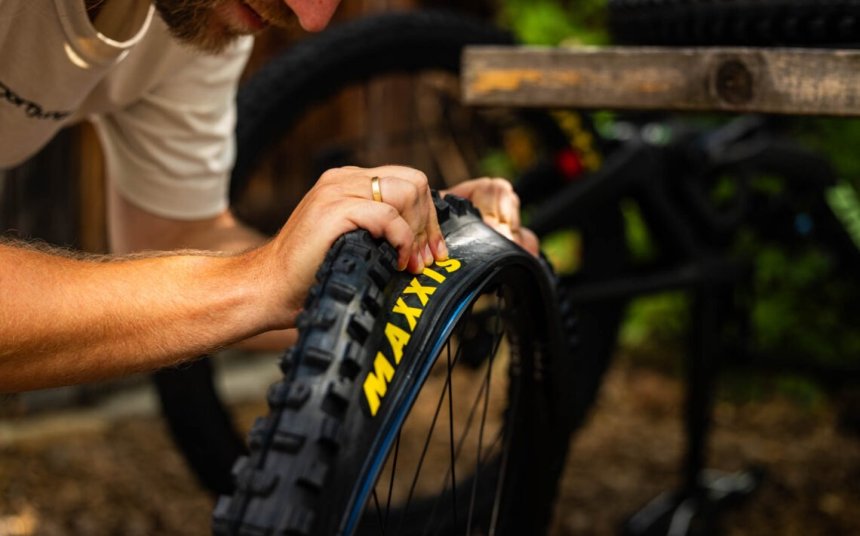
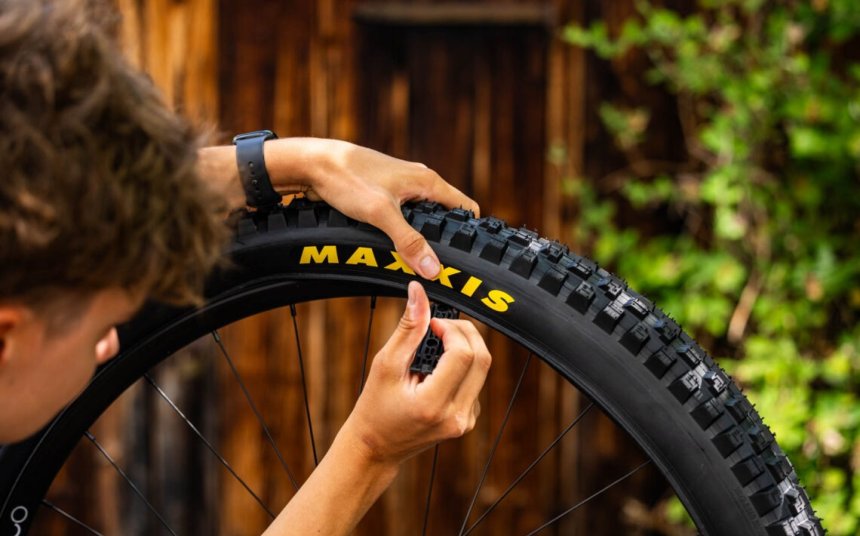
Every evaluation begins in the workshop. Given the inherently stiff nature of downhill casings, the question arises: is the new construction harder to mount than its predecessor?
To determine this, several team members conducted repeated fit-and-remove cycles on both tire types. Despite the summer heat, the consensus was clear: there’s no significant difference in mounting difficulty between the old and new versions. For those who have never struggled with downhill tires, this one will not pose a challenge. And for those who dislike the task of fitting tires, the new DH casing is no more daunting than any other heavy-duty construction—MAXXIS tires remain among the easiest to mount in this category.

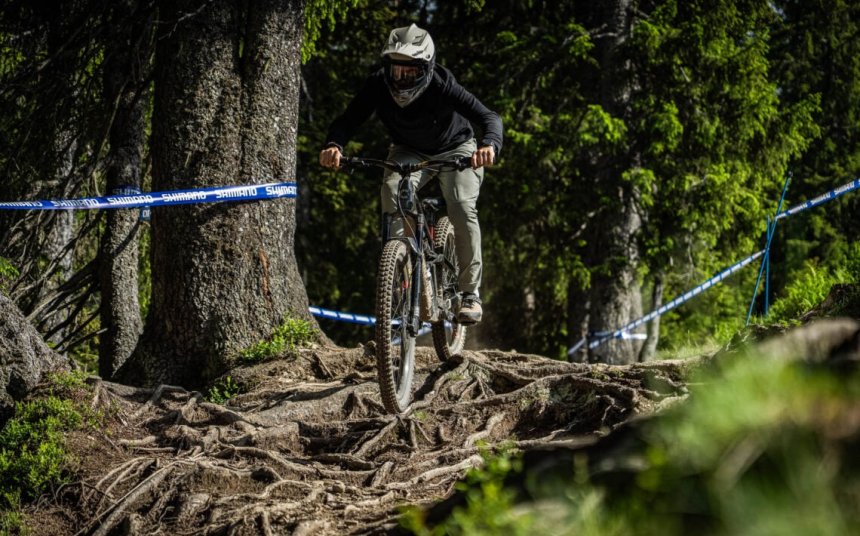
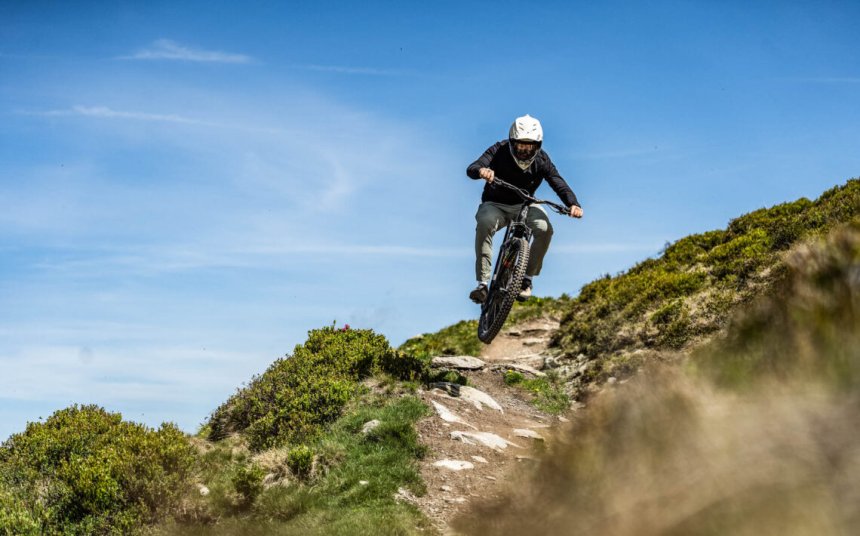
Now, it’s time to hit the trails. In practice, the new MAXXIS DH casing provides remarkable vibration damping and allows for lower pressures compared to its predecessor. With a rider weight of approximately 81 kg, we typically ran the previous DH casing at about 1.6 bar (23 psi) in the front and 1.75 to 1.8 bar (25 to 26 psi) in the rear. With the new DH casing, we could reduce pressures to around 1.4 bar (20 psi) in the front and 1.55 to 1.6 bar (22 to 23 psi) in the rear without sacrificing cornering support.

The impact of these lower tire pressures is immediately felt on the trail. The tire conforms beautifully to the terrain, providing an exceptional grip. Corners, off-camber sections, and heavy braking zones all benefit from the enhanced ground contact. Moreover, the casing remains impressively stable. Even at these reduced pressures, aggressive riding through bike park berms is possible without the tire folding or feeling uncertain. Notably, the typical “XX” crease marks on the sidewall, which often indicate excessive casing movement, take significantly longer to appear.

Final Thoughts on the New MAXXIS DH Casing
MAXXIS has clearly elevated their most durable gravity tire with the new DH casing. Both in laboratory tests and on the trails, it demonstrates enhanced resistance to punctures and impact damage compared to its predecessor. The added sidewall stability is evident from the first ride, translating into excellent cornering support, impressive grip, and the ability to run lower pressures. For those who frequent bike parks, compete in enduro, or tackle challenging downhill trails, this casing stands out as one of the most convincing options available.

Pros
- Significantly improved sidewall stability
- Considerably better puncture protection with minimal weight increase
- Ability to run lower tire pressures without sacrificing stability
- Reduced rolling resistance

Cons
- Lab-measured improvements were not as pronounced as MAXXIS claims
For further details, please visit the MAXXIS website.
Share
What's Your Reaction?
 Like
0
 Dislike
0
 Love
0
 Funny
0
 Angry
0
 Sad
0
 Wow
0