Exploring the Honda RN0: A Unique Blend of Motorcycle Heritage and eMTB Technology
Honda's RN0 eMTB, weighing around 24 kg and equipped with a lightweight Shimano motor, aims to captivate touring and trail enthusiasts. Developed with ROTWILD, it will be available through motorcycle dealerships, marking Honda's entry into the eMTB market.

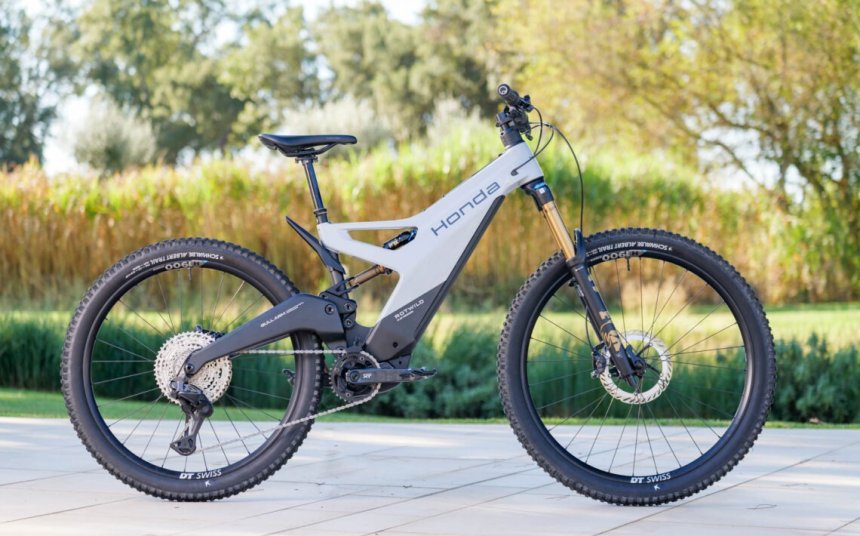
Honda's latest venture into the eMTB market, the RN0, showcases a blend of motorcycle heritage and modern cycling technology. Weighing approximately 24 kg and featuring a lightweight Shimano motor, this bike is designed to appeal to touring and trail riders. Developed in collaboration with ROTWILD, the RN0 will be sold initially through select motorcycle dealerships, offering a fresh approach to eMTB distribution.
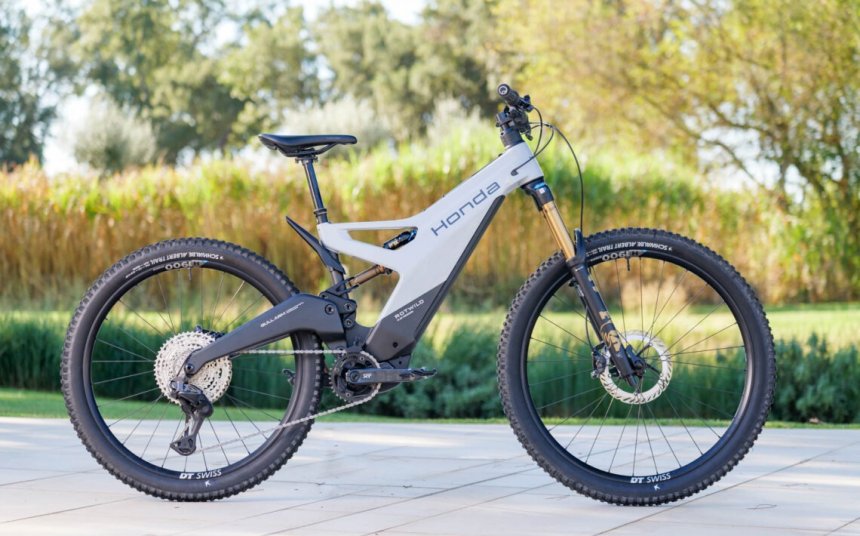
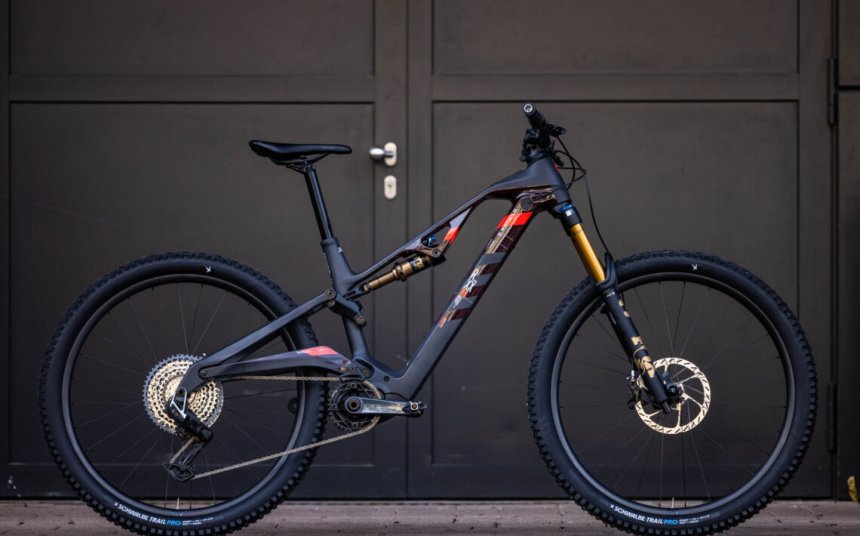
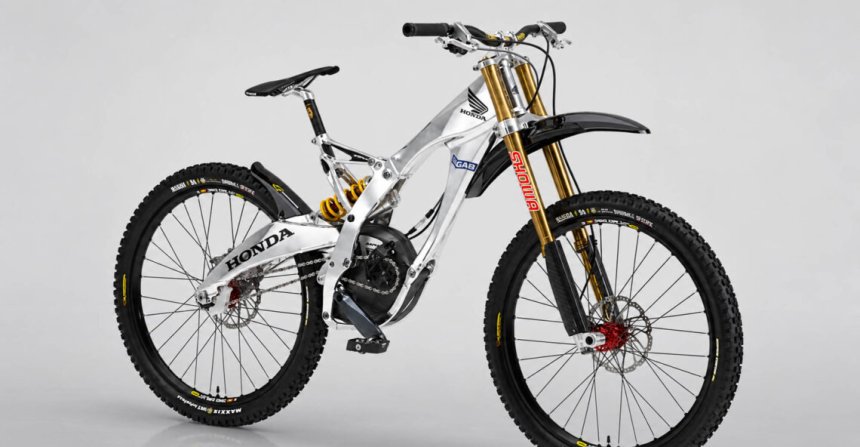
The design of the RN0 is strikingly different, evoking the Y-frame aesthetics of the 1990s. Honda is not new to cycling; their RN01 model made a notable impact in downhill racing. With the RN0, Honda is now venturing into the all-mountain category, offering a carbon-framed eMTB available in one configuration across three sizes.
Honda aims to deliver a bike that feels intuitive right from the start, allowing riders to enjoy their experience without extensive adjustments. The RN0 is targeted at active touring and trail enthusiasts, potentially attracting those with a motorcycle background. Initially, it will be sold through select Honda motorcycle dealerships in Europe.
The sales strategy includes expert consultations, organized test rides, and professional handovers. Dealers are expected to remain a key contact point for customers post-purchase, backed by trained service partners and component specialists. Future plans may include expanding the dealer network to include bicycle retailers, though specifics on launch countries, dealership participation, delivery timelines, or pricing are yet to be revealed. Prospective buyers will want to ensure local support and services are available alongside the opportunity for test rides.
Key Highlights of the Honda RN0
Pros
- Lightweight Shimano EP810 motor, weighing 2.3 kg
- Straight seat tube accommodates a long dropper post
- Neat frame aesthetics with effective cable routing
Cons
- Battery weighs 4.1 kg, requiring screws for removal
- Test model featured only 150 mm dropper travel
- Hard battery cover lacks a softer protective layer
Specifications
- Carbon monocoque frame with Gull Arm rear suspension
- 160/145 mm suspension travel (front/rear)
- Shimano EP810 motor with 100 Nm torque and 750 W peak power, weighing 2.3 kg
- Removable 720 Wh battery, approximately 4.1 kg
- Auto Shift for automatic gear changes, Auto Assist for dynamic assistance adjustments
- 29″ front wheel paired with a 27.5″ rear wheel
- Single build option, available in sizes S, M, and L
- Total weight around 24 kg according to manufacturer
Detailed Look at the Honda RN0
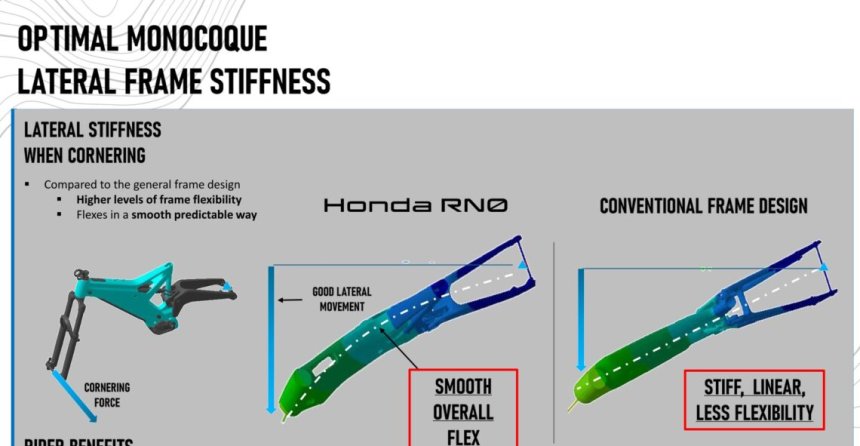
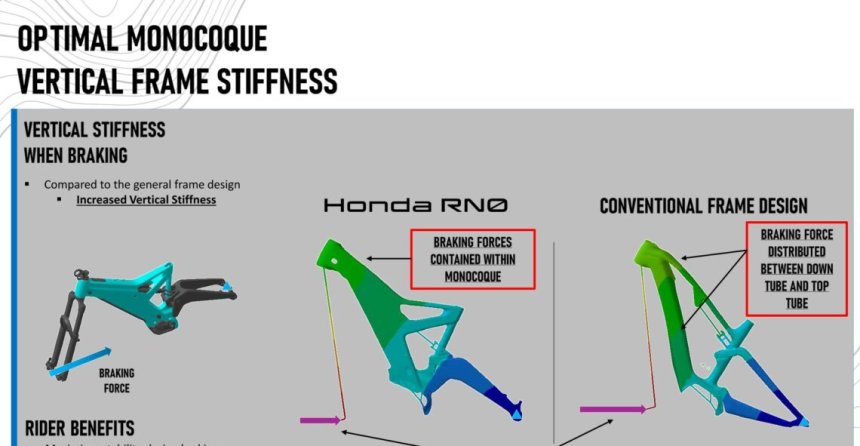
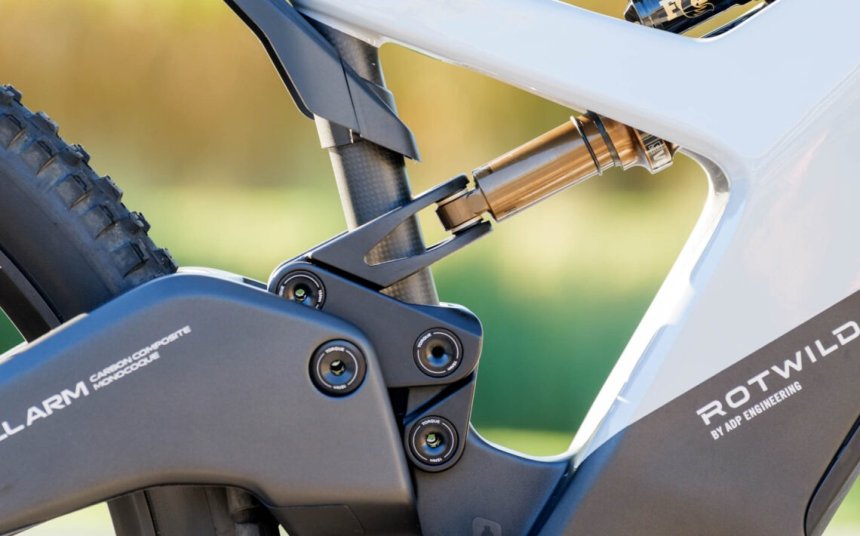
The RN0’s unique frame design is not just for aesthetics; it incorporates a carbon monocoque structure with a Gull Arm rear suspension, integrating motorcycle engineering principles into cycling. The frame is engineered to flex laterally while maintaining vertical stiffness, enhancing cornering and braking stability. Whether this translates to a noticeable difference on the trails remains to be seen.
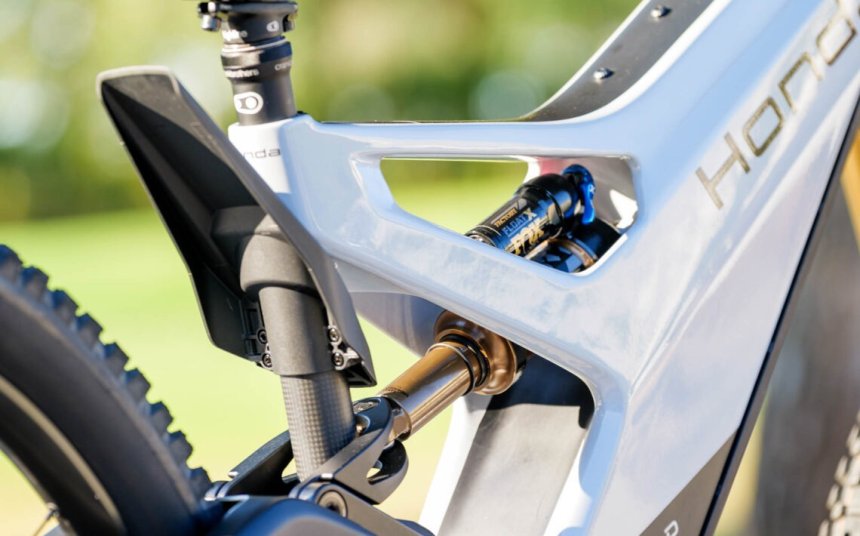
The frame quality is commendable, with well-executed cable routing. The straight seat tube provides ample depth for a long dropper post, contributing to a clean overall look with an integrated seat clamp. However, some plastic elements feel less premium despite consistent panel gaps. The hard battery cover could benefit from a softer material to absorb impacts better, especially given its exposed placement. The mudguard integrates well into the design, though its practical advantages are less convincing.
Component Performance of the Honda RN0
The Shimano System: Lightweight Motor, Heavy Package
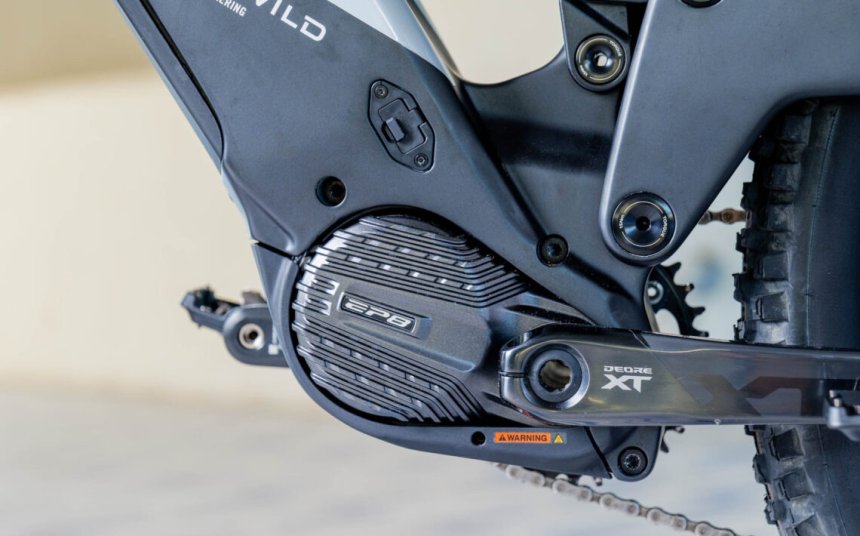
The Shimano EP810 motor offers a combination of low weight and robust performance. Weighing in at 2.3 kg, it provides up to 100 Nm of torque and 750 W peak power. For comparison, Avinox lists the M2S at 2.59 kg, while Bosch's Performance Line CX Gen 5 is at 2.8 kg. Thus, the Shimano motor is approximately 11% lighter than the M2S and 18% lighter than Bosch’s offering. However, this weight advantage does not significantly impact the overall weight of the Honda RN0, which includes a 4.1 kg battery contributing to the total claimed weight of around 24 kg.
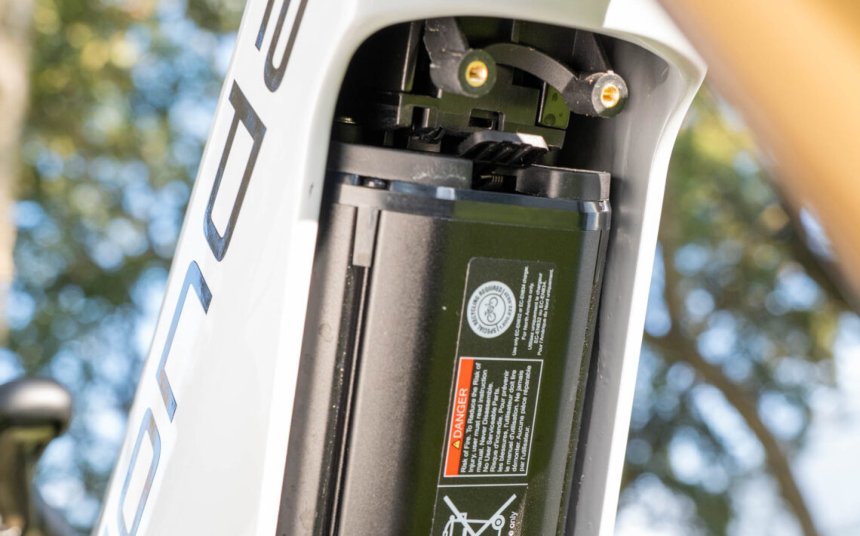
Battery handling presents some challenges, as it requires the removal of two T20 Torx screws, making it cumbersome. Riders should ensure they have the right tools, especially if planning to charge the battery away from the bike. Honda offers both 2 A and 4 A chargers, but with a 720 Wh battery, a more powerful fast charger would be preferable.
Under the label True Auto, Shimano introduces two features: Auto Shift for automatic gear changes and Auto Assist for adjusting motor support in TRAIL+ mode, which considers not only pedaling effort but also speed, cadence, and gyroscope data.
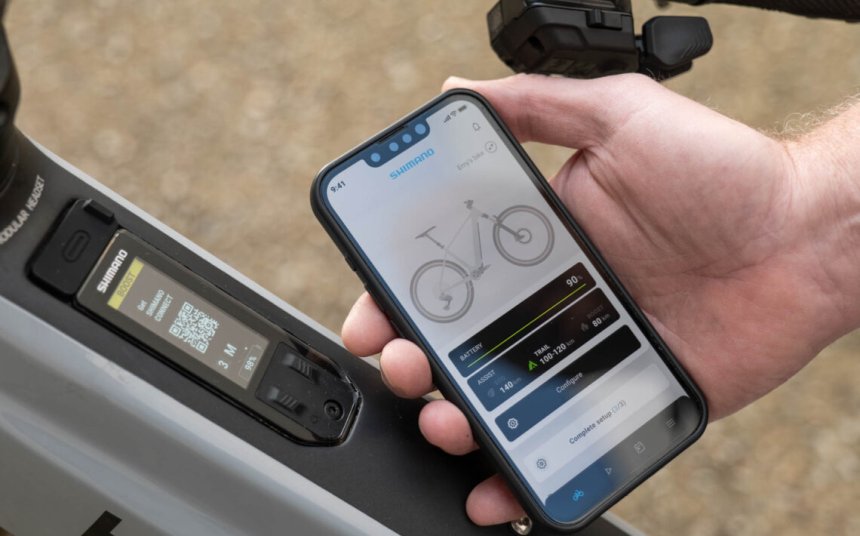
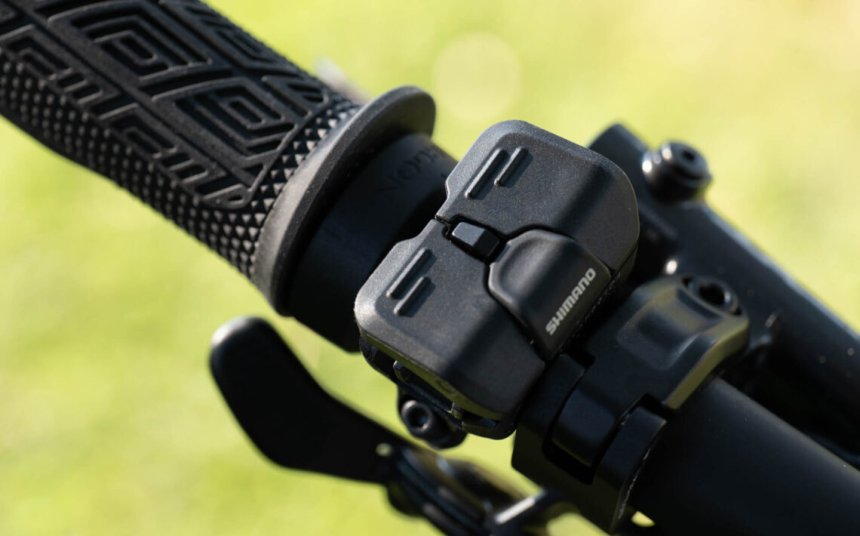
The setup includes a 2.2-inch color display on the top tube, a wireless remote with three buttons, and a USB-C port rated at 5 V and 1.5 A, suitable for charging devices, though not fast enough for rapid charging. The Shimano CONNECT app allows users to customize settings and receive wireless firmware updates.
Suspension and Components: Evaluating the Specs
The front features a premium FOX 36 FLOAT Factory fork with 160 mm of travel and a GRIP X2 damper, allowing for independent adjustment of compression and rebound damping for both high and low speeds. This setup offers riders the ability to fine-tune performance to their preferences, though it requires time and knowledge of suspension tuning. The rear is managed by a FOX FLOAT X Factory shock with 145 mm of travel, specifically tuned by ROTWILD and FOX to suit the RN0’s kinematics.
Shimano DEORE XT four-piston brakes equipped with 203 mm rotors provide reliable stopping power for spirited riding. The DT Swiss H1900 wheelset features a 29″ front and 27.5″ rear wheel, shod with 2.5″ Schwalbe Albert tires that offer excellent grip.
The Crankbrothers Highline 3 dropper post is available in travel options of 125, 150, or 170 mm, depending on frame size. On our size M test bike, the 150 mm post felt inadequate, hindering movement during descents. Although the straight seat tube could accommodate a longer post, the installed one did not maximize this potential. The ROTWILD cockpit, featuring 780 mm handlebars and a 50 mm stem, strikes a balance between comfort and stiffness. However, the stem clamp required unusually tight bolt adjustments to keep everything secure. The Ergon GDH Team grips offered a comfortable feel during rides.
Geometry of the Honda RN0
Available in sizes S, M, and L, the RN0’s reach increases by 25 mm with each size, while the head angle, seat tube angle, and chainstay length remain constant. Honda states that the Acros headset can be adjusted with an optional kit, altering the head angle by +0.6° and extending reach by 5 mm, though this option was not evaluated separately.
| Geometry (Manufacturer) | S | M | L |
|---|---|---|---|
| Reach | 430 mm | 455 mm | 480 mm |
| Stack | 631 mm | 640 mm | 649 mm |
| Seat Tube | 428 mm | 435 mm | 452 mm |
| Head Tube Angle | 65° | 65° | 65° |
| Seat Tube Angle | 76.5° | 76.5° | 76.5° |
| Chainstay Length | 442 mm | 442 mm | 442 mm |
| Bottom Bracket Height | 345 mm | 345 mm | 345 mm |
| Wheelbase | 1,201 mm | 1,230 mm | 1,259 mm |
Honda claims the bottom bracket height is 345 mm. While this offers ample pedal clearance during climbs, it can feel somewhat disconnected on descents.
Trail Performance of the Honda RN0
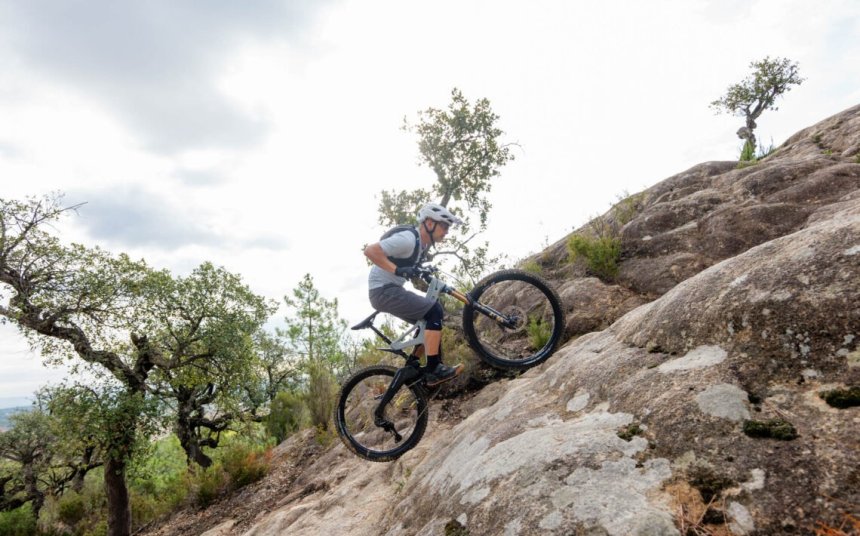
Testing the RN0 over two days on diverse trails around Santa Coloma near Girona provided ample insights. The varied terrain, including rock slabs and steep descents, served as an excellent backdrop for evaluating the bike. The test model was size M with standard production specs, although the motor and software were still in pre-production development.
Uphill Performance of the Honda RN0
On the way to the trails, the Auto Shift feature simplifies gear selection, allowing riders to focus on pedaling. Manual shifting is always an option, providing flexibility. However, the motor assistance remote could use improvement, as its feedback felt less premium.
The riding position is well-balanced, with a comfortable reach and optimal positioning over the bottom bracket. The low front end provides good pedal clearance, preventing strikes during climbs. The motor delivers sufficient power, though it is quite audible, and does not notably improve noise levels compared to the EP801.
The Boost mode's power delivery can be abrupt, with assistance continuing after pedaling stops, which can make control tricky. Lowering the assistance level provides a smoother experience, but the software version tested still requires further refinement.
On the trails, the automatic shifting system shows its limitations, often shifting too late for sudden inclines, leading to harsh gear changes. A setting allowing automatic shifts only when not pedaling would enhance control and predictability.
Downhill Performance of the Honda RN0
The RN0 encourages an active riding style, with a well-proportioned reach making it agile and lively. The suspension effectively absorbs small bumps while providing necessary support for bigger impacts. The suspension progression is well-calibrated, allowing full use of travel without harsh bottom-outs. This balance of sensitivity and support is commendable.
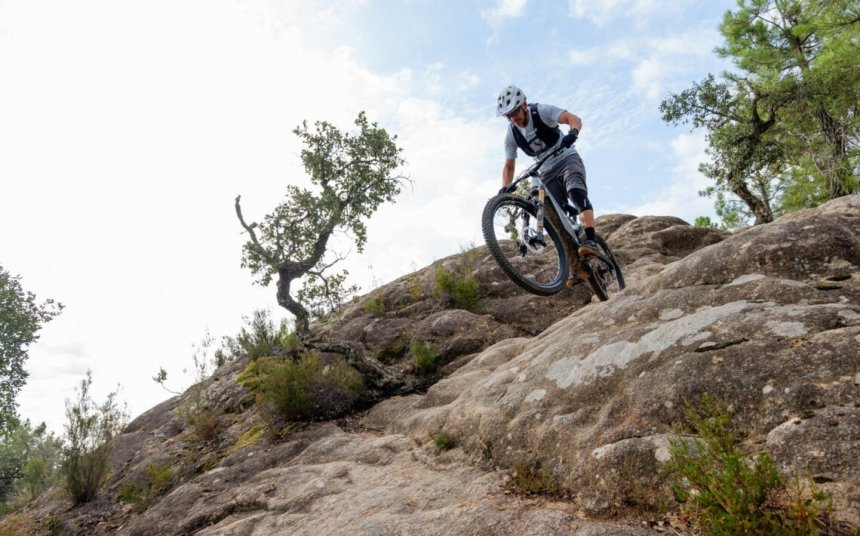
The bike handles high speeds adequately, but a more integrated feel would enhance the experience. The higher bottom bracket and short dropper post limit rider freedom on descents. The overall weight also affects handling during aggressive riding, raising questions about the pairing of a lightweight motor with a heavier battery and overall bike weight.
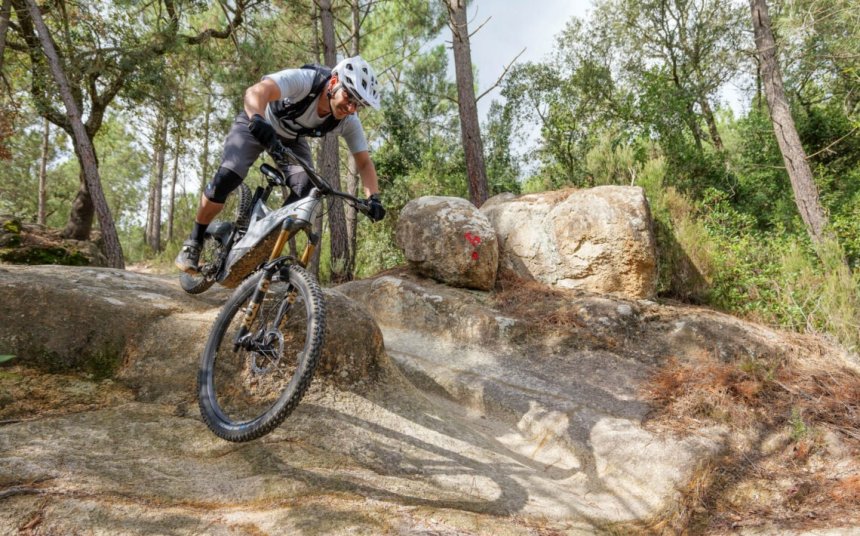
During testing, the bike produced noticeable rattling noises from the motor area, potentially amplified by the frame's size. The engineered frame flex did not yield any remarkable differences compared to other models. On the first day, the mudguard rubbed against the suspension travel, but adjusting it on the second day resolved the issue.
Target Audience for the Honda RN0
Ideal for:
Riders seeking simplicity
The RN0 is a great choice for those wanting an easy-to-ride eMTB. Its intuitive handling and responsive suspension foster confidence and comfort.
Touring riders with a penchant for trails
The Auto Shift feature eases the ride on access roads and forest paths. The riding position and motor performance excel during climbs, although we recommend reducing the boost for smoother power delivery.
Honda enthusiasts
With its distinctive look and sales through Honda motorcycle dealerships, the RN0 offers a familiar entry into the eMTB segment. However, potential buyers should verify if their local dealer can provide sizing, suspension setup, and maintenance support.
Not suitable for:
Weight-conscious riders
The RN0's overall weight of approximately 24 kg does not align with expectations set by the 2.3 kg motor. Those seeking a lightweight eMTB may find this package unsatisfactory.
Riders who prioritize quiet operation
The noticeable rattling from the motor area during rides detracted from the experience. If a quiet ride is essential, thorough testing of the final production model is advisable.
Automatic shifting perfectionists
Those expecting flawless automatic gear changes in all conditions may find limitations in the software version tested, where some shifts under load were delayed and harsh.
Final Thoughts on the Honda RN0
The RN0 embodies a significant motorcycle influence in its design and sales strategy, though its weight raises questions. The bike’s agile handling and well-balanced suspension make it suitable for sporty touring and trail riding. Despite the lightweight Shimano motor, the RN0 does not achieve a lightweight status. Issues like rattling noises, limited dropper post travel, and unfinished motor tuning detracted from our initial ride experience. Potential buyers should consider testing the final production model before making a decision.

Pros
- Agile, intuitive handling
- Well-balanced suspension
- Ample pedal clearance during climbs
- Good responsiveness and support for active riding
- Distinctive and recognizable design

Cons
- Abrupt power delivery and prolonged overrun in high assistance mode
- Noticeable rattling from the motor area during rides (pre-production model)
- High bottom bracket affects integrated feel on descents
Further details can be found on Honda's official website.
Share
What's Your Reaction?
 Like
0
 Dislike
0
 Love
0
 Funny
0
 Angry
0
 Sad
0
 Wow
0